
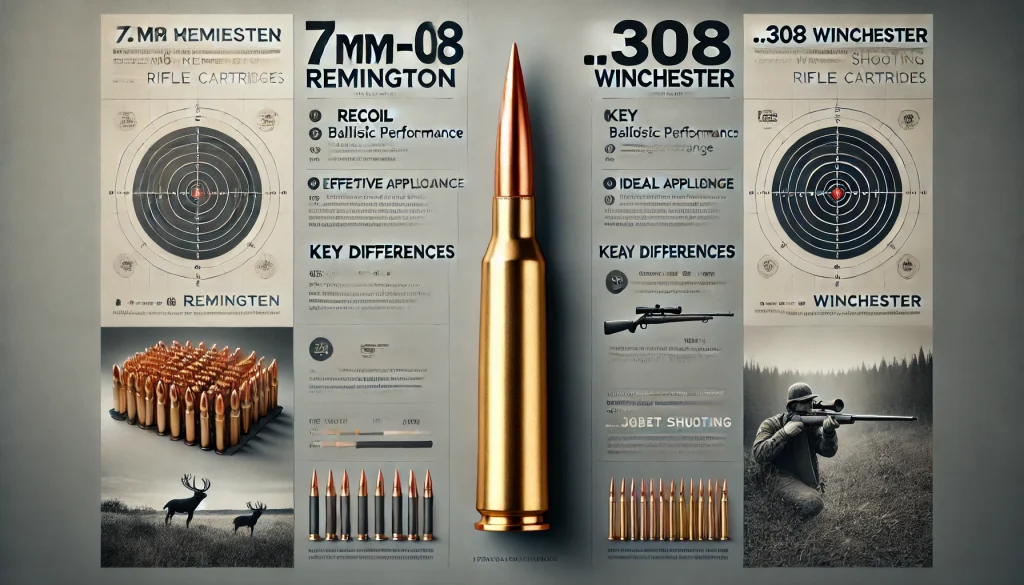
When comparing the 7mm-08 and the .308 Winchester cartridges, it is essential to recognize that both are popular choices for hunting and target shooting, each offering unique advantages. Enthusiasts frequently engage in debates regarding the merits of one over the other, often using practical hunting scenarios for cartridge comparison.
This article explores the differences between the two cartridges, focusing on aspects such as cartridge design, ballistic performance, recoil, and cost. Additionally, it examines their strengths in hunting versus target shooting and identifies which cartridge is the most versatile for various applications. Understanding these differences is crucial for optimizing your shooting experience and ensuring you are field ready.
Key Takeaways:
- The 7mm-08 and .308 cartridges have subtle differences in design, ballistics, and recoil, but both are widely available and affordable.
- The best choice for hunting between the two depends on game size and distance, as well as accuracy and bullet selection, with considerations for velocity energy and recoil impulse.
- For target shooting, the .308 Winchester excels in long-range shooting and recoil management, while the 7mm-08 offers excellent accuracy and versatility for various applications such as competitive shooting.
What is the Difference Between 7mm-08 and .308?
A comprehensive comparison of the 7mm-08 and .308 cartridges must examine their design differences, ballistic performance, and overall effectiveness in real-world hunting situations. This analysis is particularly important when considering the specific game animal for which the suitability of a caliber cartridge is being assessed, often requiring insights into maximum average pressure and rifling twist rate.
Both the 7mm-08 and .308 Winchester are popular choices among hunters, and their popularity stems from unique characteristics that significantly influence decisions about which hunting rifle to select for the field. With over 40 years of experience in the hunting and firearms industry, experts like Richard Mann and publications such as Field & Stream have compiled valuable information regarding the appropriate application of each caliber cartridge.
1. Cartridge Design
The design of the 7mm-08 and .308 cartridges reveals distinct differences in caliber and overall engineering, which can significantly impact performance, particularly in terms of cartridge efficiency and ballistic coefficient.
The 7mm-08 features a .284-inch bullet diameter, allowing for a flatter trajectory and reduced wind drift, making it an ideal choice for medium-sized game such as deer and antelope.
In contrast, the .308, with its .308-inch bullet diameter, provides greater versatility and stopping power for larger game like elk and bear.
Both cartridges are typically constructed with brass casings and lead projectiles, although advancements from manufacturers like Nosler and Remington have led to the introduction of options such as polymer-tipped bullets to enhance ballistic performance.
The design philosophy behind these cartridges emphasizes not only the mechanics of firing but also their terminal ballistics, ensuring that hunters can select a cartridge that meets their specific hunting needs and target animals.
2. Ballistics Performance
Ballistics performance refers to the comparison between the 7mm-08 and .308 cartridges concerning their velocity, energy delivery, and overall efficiency, which are crucial for both practical hunting and competitive shooting.
The ballistic coefficients of these two cartridges play a crucial role in evaluating their performance in both tactical and hunting scenarios. Generally, the 7mm-08 boasts a higher ballistic coefficient, resulting in a flatter trajectory and better energy retention at longer distances. This characteristic makes the 7mm-08 particularly suitable for hunting game animals, such as deer or antelope, at ranges exceeding 300 yards.
In contrast, the .308 has a longer history and a proven track record, providing adequate energy for larger game, such as elk and black bear, at shorter distances of 200 yards or less.
Understanding these factors helps hunters and marksmen choose the most appropriate cartridge for their hunting style, considering distance, environmental conditions, and the specific game animal they intend to hunt.
3. Recoil
Recoil is a crucial factor for many shooters, influencing their choice between the 7mm-08 and .308 cartridges, particularly when using lightweight rifles.
Evaluating recoil dynamics for these two popular cartridges is essential, as they significantly affect shooter comfort during extended shooting sessions, accuracy, and the ability to make follow-up shots, especially when using lightweight rifles.
A shooter using the 7mm-08 may find the recoil more manageable, which can facilitate better target tracking in scenarios requiring multiple shots, such as fast-paced hunting.
In contrast, the stronger recoil impulse of the .308 can impart more force and movement, making it challenging to maintain a steady aim and stay aligned with the target, particularly in long-range shooting scenarios.
By closely examining these factors, one can understand how the two cartridges perform differently in various situations and the importance of matching ammunition to specific shooting styles and intended uses.
4. Availability and Cost
When considering the practical aspects of the 7mm-08 and .308 cartridges, the availability and cost of each type of ammunition are crucial factors for hunters.
The price difference between the two cartridges can be significant, but local supply and demand greatly influence these prices and ammunition availability. The .308 cartridge is more popular and widely stocked, which typically results in lower prices. In contrast, the 7mm-08 is less commonly available but can be found at specialty shops and retailers that cater to hunters targeting specific game animals, such as deer or elk.
These factors may impact a hunter’s decision, especially when preparing for particular hunting scenarios. For instance, when hunting larger game animals, lower prices may lead a hunter to choose the .308 due to its proven reliability and availability. Conversely, the flatter trajectories of the 7mm-08 may attract hunters navigating difficult terrain.
Which One is Better for Hunting?
Deciding whether the 7mm-08 or .308 cartridge is better for hunting depends on several factors, including the size of the game animal, the distance of the shots, and local hunting conditions.
Experienced hunters often weigh these considerations alongside their personal preferences and shooting strengths, as both cartridges possess key attributes that make them more suitable for specific types of hunting.
Additionally, bullet selection plays a crucial role in successful hunting, as the type of bullet can significantly impact performance in the field, especially when considering different bullet weights and types for varying hunting conditions.
1. Game Size and Distance
The size of the game animal and the distance to the target are two of the most important factors in determining whether the 7mm-08 or .308 cartridges are the better choices.
Different cartridges exhibit varying performance characteristics, particularly when it comes to hunting effectiveness for smaller animals at medium ranges compared to larger game at longer distances.
For pronghorn hunts in open fields, the 7mm-08 is preferable due to its flatter trajectory, higher velocity, and reduced recoil, which enhance the hunter’s chances of success.
Conversely, when targeting much larger animals, such as moose, the .308 cartridge’s superior energy retention and knockdown power at longer ranges become crucial for ethical hunting success.
Choosing the right caliber is essential not only for hunting success but also for effective wildlife management, ensuring ethical and sustainable practices in the field.
2. Accuracy and Precision
Accuracy and precision are crucial factors to consider when selecting a cartridge for hunting, as they significantly impact a hunter’s success in the field with both the 7mm-08 and .308.
Several factors contribute to this level of accuracy, including not only the choice of rifle but also the design of the bullet itself. The 7mm-08 is recognized for its flat trajectory and low recoil, making it a popular option for young or less experienced hunters. In contrast, the .308 is noted for its excellent energy retention and versatility, making it well-suited for a wide range of game, including elk, moose, and black bear.
In terms of inherent accuracy, the 7mm-08 excels in precision shooting due to its higher ballistic coefficient, while the .308 is favored for long-range shooting. Hunters should consider these characteristics in relation to their specific situations to ensure that their choice of cartridge aligns with the ranges and types of game they typically pursue.
3. Bullet Selection
When selecting ammunition for the 7mm-08 and .308 cartridges, bullet weight and type are important factors that significantly affect performance against different game animals.
Various bullet weights can influence trajectory, energy transfer, and the overall effectiveness of the round upon impact. For example, heavier bullets often provide deeper penetration and greater terminal ballistics, making them more suitable for larger game such as elk or moose. Conversely, lighter bullets may expand more quickly, giving them an advantage when hunting smaller animals like deer, pronghorn, or antelope.
Additionally, the type of bullet—such as soft point or polymer tipped—plays a crucial role in determining how the round performs upon impact with the target. Depending on the hunting conditions, including terrain and weather, selecting the appropriate ammunition can be the difference between a successful hunt and a missed opportunity. Some renowned options include the Wilson Combat NULA and Remington’s polymer-tipped bullets for enhanced performance.
Which One is Better for Target Shooting?
When choosing between the 7mm-08 and .308 cartridges for target shooting, the criteria to consider include accuracy, long-range effectiveness, and recoil management. Notable rifles like the Ruger 77 MKII and Tikka T3 Lite are often preferred for these purposes due to their precision and reliability.
These factors are essential for achieving consistent results on the target.
1. Long Range Shooting
Long-range shooting demands precise ballistic performance, which is why the 7mm-08 and .308 cartridges are favored by enthusiasts for their effective ballistic coefficients. Additionally, the 6.5 Creedmoor is often compared to these cartridges for its performance in similar conditions.
While both cartridges, including the 7mm-08 and .308 Winchester, demonstrate good accuracy at extended distances, a deeper understanding of various factors is essential for achieving consistent long-range hits.
For instance, environmental factors such as wind drift can significantly alter the trajectory of a long-range projectile, requiring shooters to make necessary adjustments.
Additionally, bullet drop and trajectory are critical considerations for long-range shots, as even minor changes can affect the likelihood of hitting the target, especially when dealing with a 10 mph breeze.
When comparing the two cartridges, the 7mm-08 offers lower recoil and flatter trajectories at long ranges, while the .308 is recognized for its versatility and the wide availability of ammunition.
Each cartridge presents distinct advantages in long-range shooting, depending on the shooter’s specific needs. Performance comparison of these rifle cartridges is crucial in selecting the right tool for the job.
2. Accuracy and Precision
Accuracy and precision are vital in target shooting, and both the 7mm-08 and .308 caliber cartridges have their distinct advantages.
While the skill of the shooter is a crucial factor in determining accuracy, other elements outside the shooter’s control also play a significant role. These include the rifle setup—such as scope alignment and consistent trigger pull—as well as environmental conditions like wind, humidity, and temperature.
The lighter 7mm 08 bullet may facilitate easier maneuvering of the rifle in various shooting scenarios, while .308 cartridges are renowned for their versatility and performance in challenging conditions.
Understanding how these factors interact can aid shooters in selecting the right cartridge to maximize their accuracy.
3. Recoil Management
Proper recoil management techniques significantly impact the effectiveness of both the 7mm-08 and .308 cartridges by helping shooters maximize accuracy and control. Every aspect of recoil, from external to internal ballistics, can influence accuracy. Understanding the dynamics of recoil allows shooters to adjust their approaches for enhanced comfort and performance.
Rifle Weight: Shooters should select a rifle weight that aligns with their shooting style, as heavier rifles naturally absorb more recoil, resulting in better shot accuracy.
Shooting Position: Adopting a stable shooting position—whether standing, kneeling, or prone—will enhance stability during the shot.
Proper Technique: Shooters can further mitigate the effects of recoil by maintaining a firm grip on the rifle and positioning the stock correctly against the shoulder to absorb more of the backward force.
Given that the recoil characteristics of the 7mm-08 are less severe than those of the .308, shooters must adopt different approaches to improve performance with both cartridges.
Which One is More Versatile? A Look at Caliber Cartridges
The overall versatility of the 7mm-08 and .308 cartridges can be evaluated by examining their effectiveness in various hunting and target shooting scenarios, which may differ significantly based on individual needs and preferences.
1. Hunting Applications
The hunting applications for the 7mm-08 and .308 cartridges are varied, making them suitable choices for a range of game animals, from deer to elk. The performance of these cartridges has been highlighted by experts like Richard Mann in Field & Stream.
For example, in open terrains where shots can easily exceed 300 yards, the .308 is often preferred due to its superior energy retention and longer effective range. This makes it an excellent choice for larger game, such as elk or moose, as it provides deep penetration.
In contrast, the 7mm-08 excels in more wooded environments or situations that require precision shooting, as its lighter recoil allows for quicker follow-up shots, making it especially effective for nimble deer hunting.
When considering factors such as distance, game size, and terrain, hunters often weigh the strengths of these two cartridges to achieve their specific hunting goals.
2. Target Shooting Applications
In target shooting applications, both the 7mm-08 and .308 cartridges are capable of delivering impressive precision and performance on the range.
Each cartridge has unique attributes that cater to different disciplines, whether in long-range target shooting or tactical shooting scenarios.
The 7mm-08, known for its lighter recoil, may be preferable for target shooters who prioritize comfort during extended range sessions, making it an excellent choice for beginners or those focused on precision shooting.
Conversely, the .308 cartridge is often prized for its versatility and stopping power, offering significant advantages in competitive scenarios where high knockdown power is essential.
By analyzing the performance characteristics of these cartridges, shooters can make informed choices that enhance their target shooting experience, ensuring that their selection aligns with their specific shooting goals.
3. Other Uses and Rifles
The broader performance capabilities of the 7mm-08 and .308 cartridges, such as those offered by Remington and Nosler, extend beyond hunting and target shooting to include several other applications.
In competitive shooting, both the 7mm-08 and .308 are favored for their accuracy and manageable recoil, which facilitate rapid follow-up shots. Additionally, the 7mm-08 is well-suited for small game varmint hunting, where precise shots at various distances are essential for effective terminal performance.
The .308 has also established itself as a staple in long-range shooting and sniper applications, with its higher grain options providing superior wind resistance and terminal ballistics. These diverse performance characteristics offer additional opportunities for recreational shooting and aid in skill development for shooters aiming to enhance their abilities across different shooting disciplines.
Frequently Asked Questions
1. What is the main difference between 7mm-08 and 308 cartridges?
The main difference between 7mm-08 and 308 is the caliber size. 7mm-08 is a smaller cartridge with a 7mm diameter bullet, while 308 has a larger diameter bullet at 7.62mm.
2. Which cartridge is better for hunting, 7mm-08 or 308?
Both cartridges are suitable for hunting, but it ultimately depends on personal preference and the type of game being hunted. 7mm-08 is better for smaller game, while 308 is better for larger game.
3. Which cartridge has better ballistics, 7mm-08 or 308?
It is generally accepted that 7mm-08 has better ballistics due to its smaller size and higher velocity. However, 308 is more versatile and can perform well in a variety of hunting and shooting situations.
4. What is the recoil difference between 7mm-08 and 308?
Due to its smaller size, 7mm-08 typically has less recoil than 308. This can make it more comfortable to shoot for some individuals, especially those with smaller frames or less experience with firearms.
5. Which cartridge is more commonly available, 7mm-08 or 308 Winchester?
308 is more commonly available and has been around for much longer than 7mm-08. However, with the rise in popularity of 7mm-08, it is becoming easier to find and purchase.
6. Can a rifle chambered in 7mm-08 also shoot 308?
No, a rifle chambered in 7mm-08 cannot safely shoot 308 cartridges. The two cartridges have different dimensions and pressures, and using the wrong cartridge can be dangerous for both the shooter and the firearm.